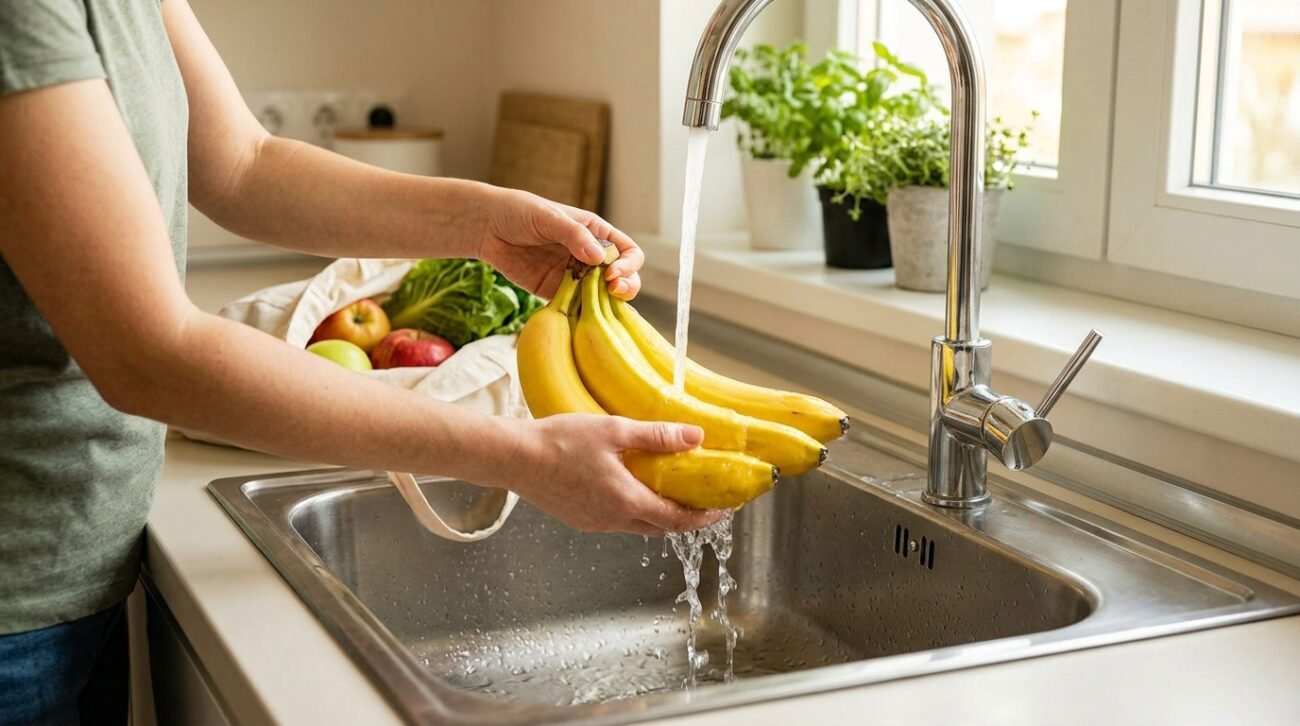
Bananas are usually kept in a fruit bowl or directly on a kitchen counter upon arriving home after grocery shopping. With their thick layer of non-consumable skin, many think of them as completely safe from contaminants. In fact, this particular characteristic acts as a very effective carrier of numerous threats, including chemical residues, microscopic pests, and pathogenic bacteria. Getting into the habit of washing bananas right away is not only a great way to ensure that the fruit doesn’t contaminate anything else, but also an easy preventive measure against potential food toxins.
Avoiding Contamination While Peeling the Banana
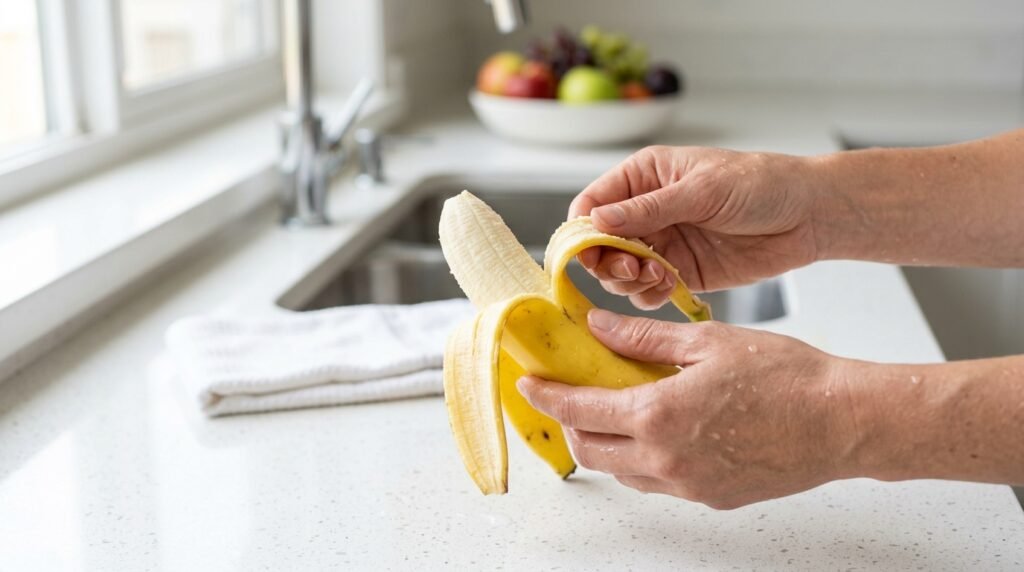
The main myth related to bananas is that the skin acts as protection from all bacteria present on it. The problem occurs when you cut the peel, press it with your fingers, and eat it. This means that there is a high risk of pushing all the surface germs into the fruit you are going to consume.
Removing Dirt and Sap
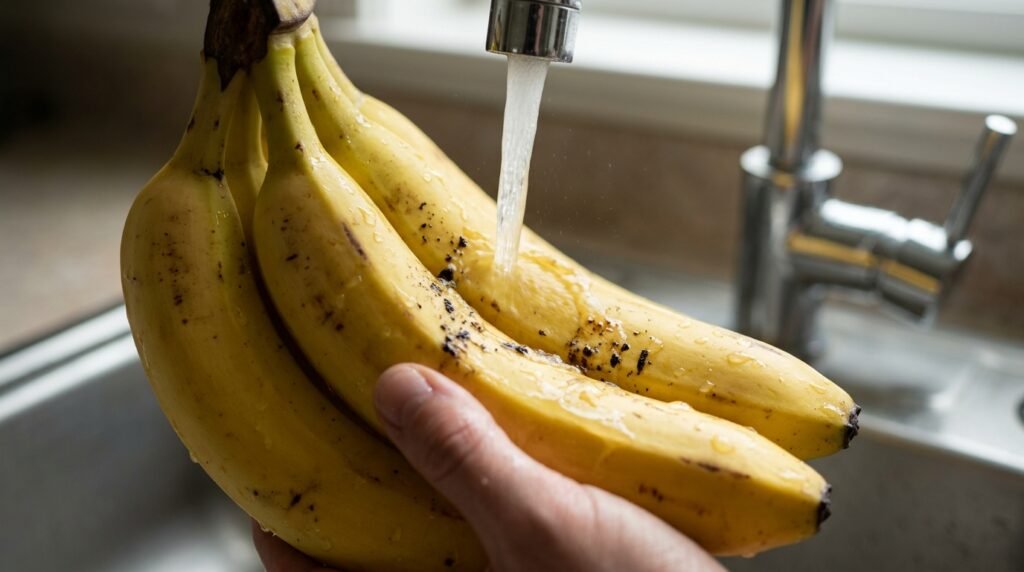
The natural sap of the banana forms right after harvesting from its tree; the sap comes in the form of latex, which eventually gets sticky when it dries up, turning into a layer of dirt that makes the peelings of the banana appear dirty. It is recommended that we clean our bananas to avoid such natural sap.
Preventing Transfer of Germs to Countertops and Bowls
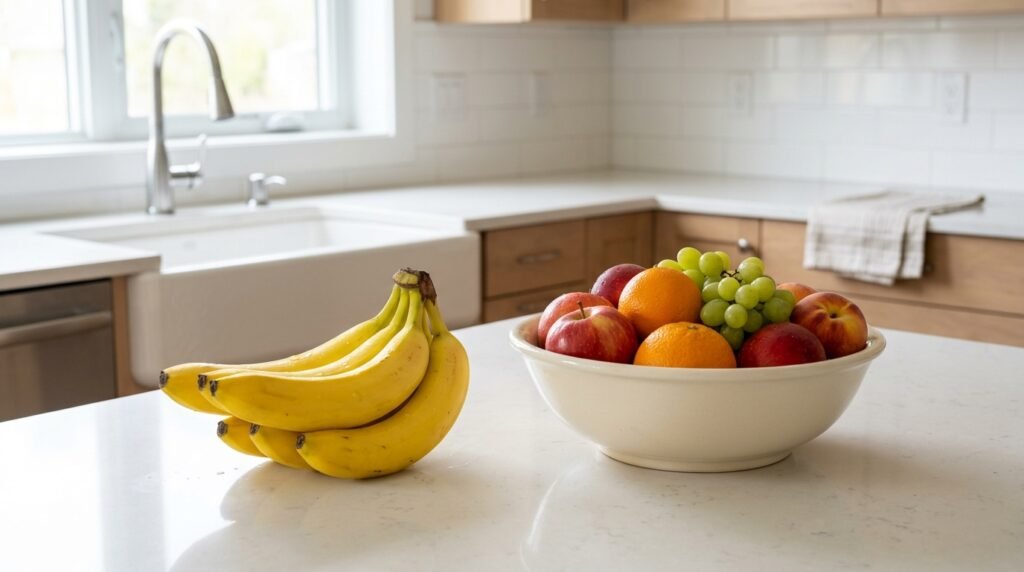
It is not safe to toss dirty bananas into the family’s ceramic bowls or clean countertops because anything that is present on their skin will get transferred to the bowls. Other fruits like apples or peaches, which do not have any skins to protect them, are therefore prone to getting germs from them.
Washing the Peel from Chemicals
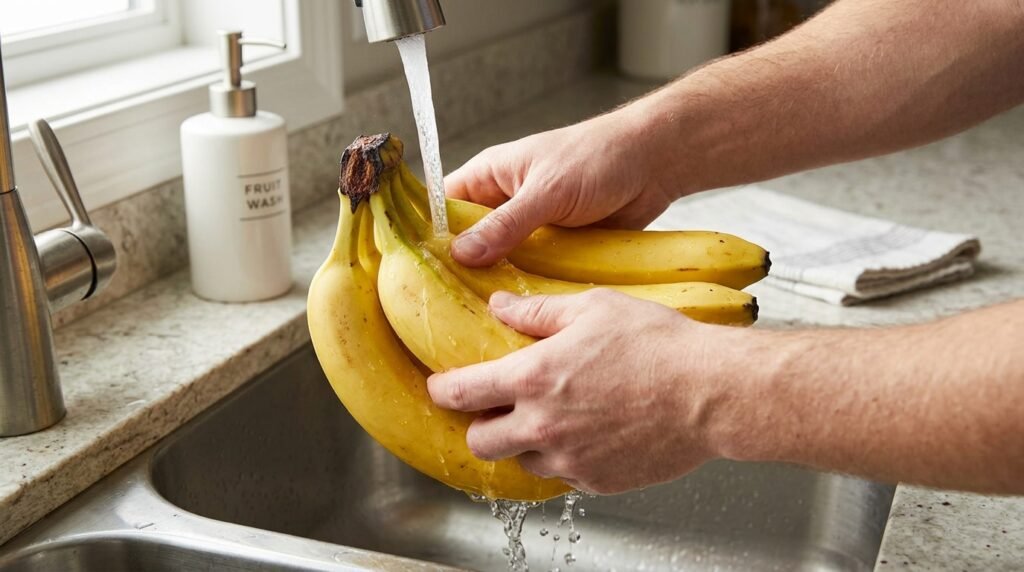
So as not to damage the bananas on their journey by ship, fungicides are sprayed onto bananas as a protective measure. This chemical layering on the banana peel is really thick and strong, particularly at the stem of the banana, making it necessary to wash the banana peel of the chemicals before separating the banana bunches.
Protecting Infants and Toddlers
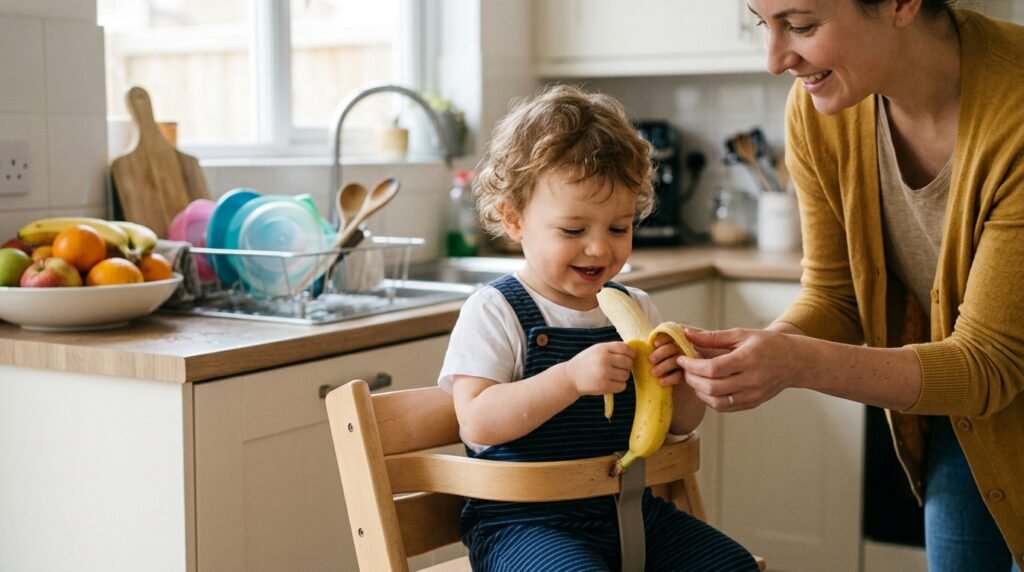
Infants have the habit of holding bananas and often like biting them through the peel while trying to open it up or while playing with the food. At this stage, the infant’s immune system is still developing; hence, allowing such peels that contain any form of bacteria and/or pesticides to be within his or her reach puts the child in danger.
Protecting Your Blend and Smoothie Machine
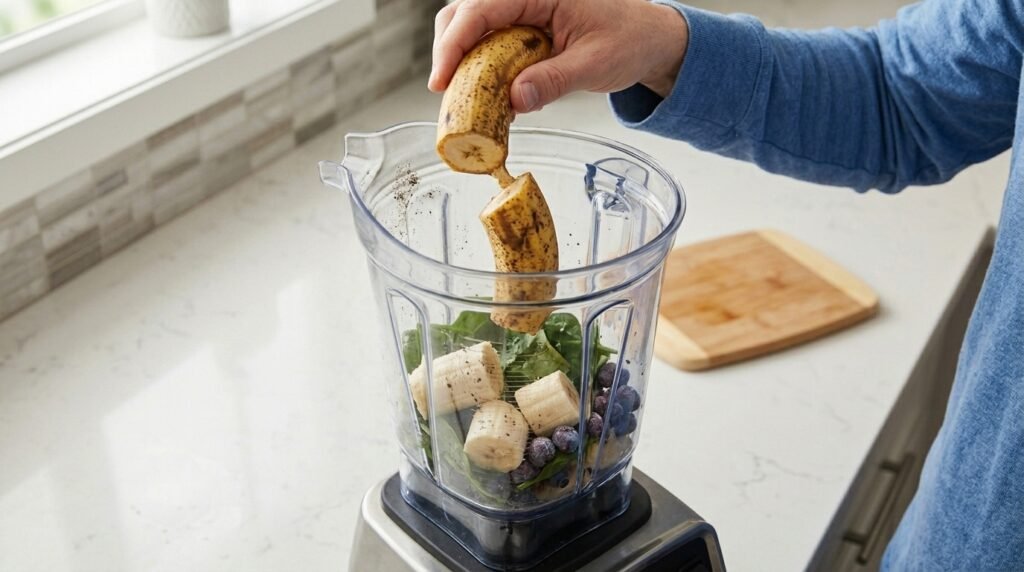
While preparing your morning smoothie, most people tend to chop their unwashed banana halves and toss them into the blender immediately. In the process, the rough edges of the peel make contact with the inner lining and blades of the blender, thereby introducing any dirt film or agrochemical residue right into your smoothie.
Maintaining Sterility of Your Refrigerator Compartments
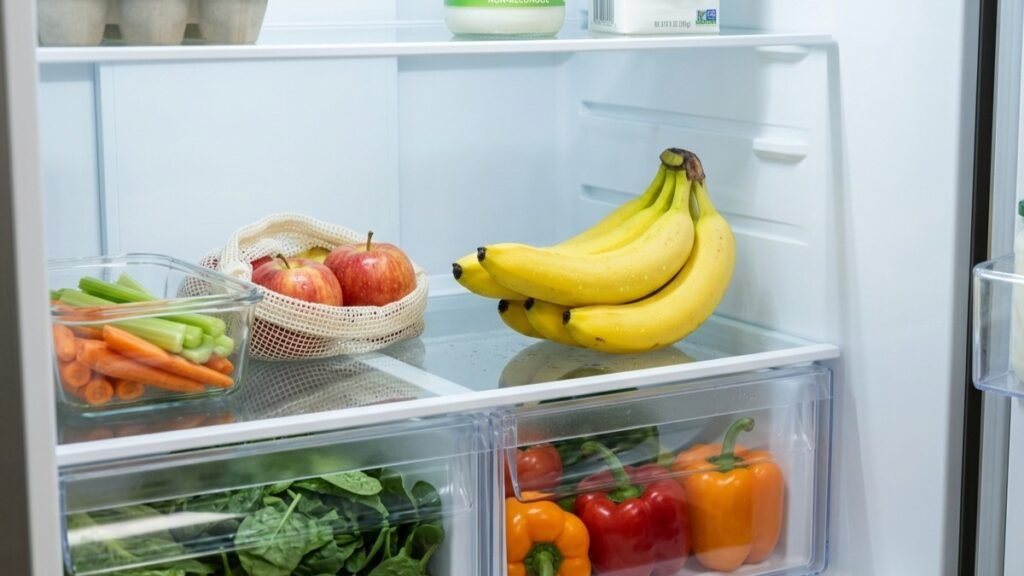
Storing overly ripe bananas in the fridge compartment in preparation for making banana bread is something that most people do without washing the peels. Doing so leaves mold and bacteria that can form on the peel inside the compartment where other foods are placed.
Enhancing Hygiene Awareness in the Kitchen
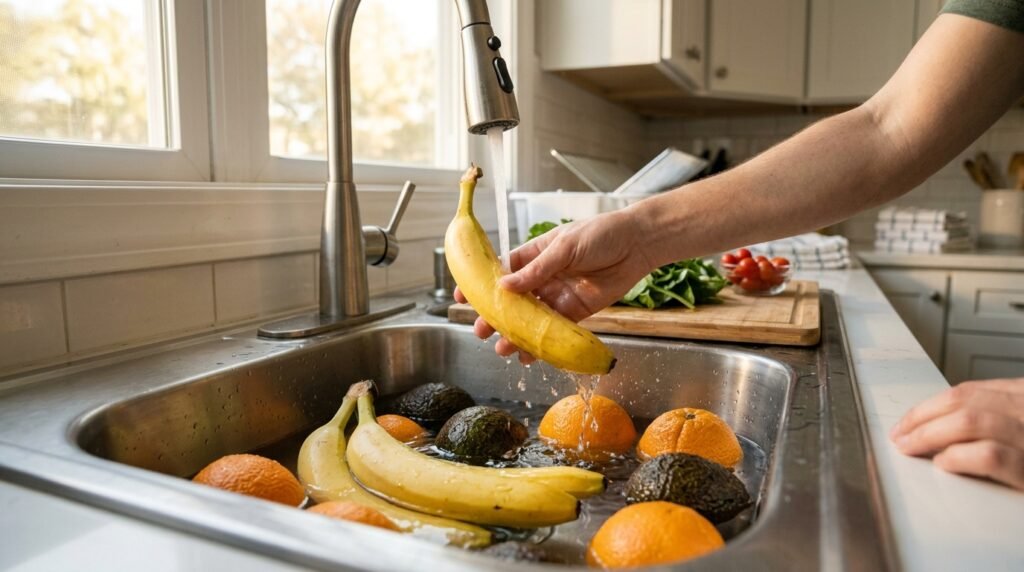
By washing your produce regardless of whether its outer skin can be eaten or not (avocado, orange, and banana), you create a great starting point when it comes to keeping food safe in the kitchen. It programs your mind into seeing that everything coming in from the outside is dirty, thus preventing contamination.
