
Sitar, a classical musical instrument characterized by the intricate interplay of its various strings and microtones, serves as an excellent means of neurological and psychological regulation. Based on Indian classical music and its healing properties (Raga Chikitsa), sitting on a sitar or simply listening to it stimulates brain neuroplasticity, balances the body’s sympathetic nervous system, and provides a structured way of experiencing emotions and mindfulness. There are at least 8 different aspects of the sitar’s influence on one’s well-being and mental health:
Alpha and Theta Wave Creation

The harmonic overtone creation of sound from the hollow gourd of the sitar (tumba) induces the brain to create alpha waves, which signify calm alertness, and theta waves, which signify meditative thought and creative processes.
Cortisol Production Suppression

Passive listening to 20 minutes of sitar music has been proven to lower cortisol production, which is the body’s primary stress hormone. Suppressed cortisol production ensures that the brain is protected from stress-related neuroinflammation and depletion of executive functioning.
Somatic Calibration and Posture Control

Practicing sitar entails sitting in a crouched position on the ground with one’s back straight. In this manner, one is required to develop bodily calibration by balancing the sitar over one’s foot and thigh, as opposed to the slouching posture that characterizes depression.
Fine Motor Abilities and Neuroplasticity
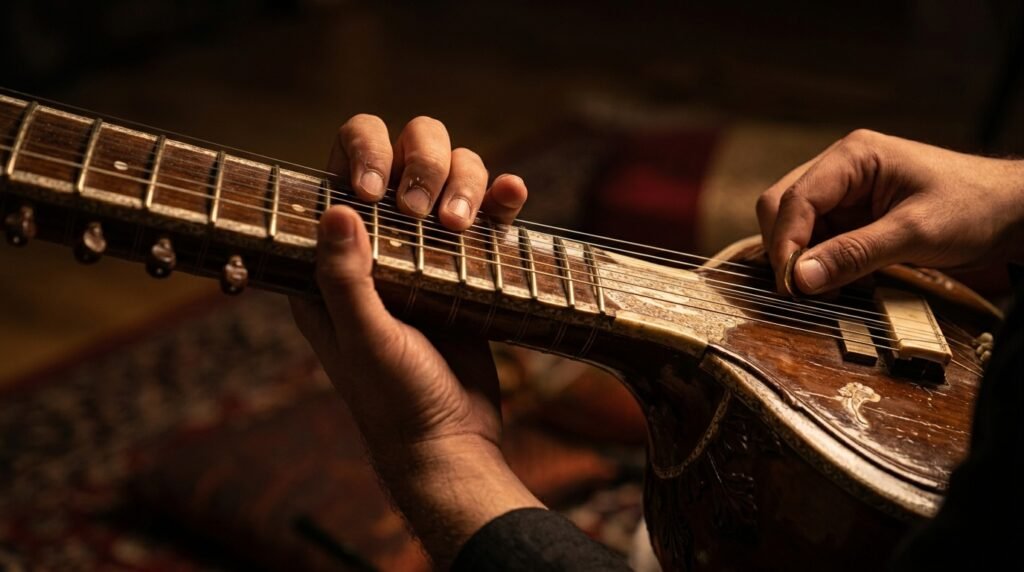
In playing the sitar, there is a need for fine motor abilities that involve controlling the left and right hands to play the melody and the strings, respectively. The coordination needed for this is important in creating cross-brain communication and enhancing neuroplasticity.
Alaap Practice as a Method of Meditation

Alaap is the first movement in sitar performance, characterized by a lack of meter and being rather slow. It serves to train musicians and audiences in mindfulness and living life at a much slower pace compared to the contemporary need to seek quick satisfaction.
Vibroacoustic Therapy and Instrument Resonance

The sitar neck and the gourd, made from hardwood and natural gourd, respectively, are placed against the body during performance. The vibration created by sounds produces physical vibrations through the body as the sound moves inside the chest cavity and the bones of the musician’s body.
Safely Express Feelings of Loss and Sadness

Specific sitar musical scales use minor keys, i.e., flattened musical notes. Engaging with this specific microtonality of sounds helps an individual to express his/her emotions of loss or sadness in a safe environment.
The Sense of Community through Collective Listening (Baithak)

Music played on the sitar was intended to be enjoyed in a personal environment, which is known as a baithak. The listeners would come closer to the performer and show their appreciation. They become vulnerable together, thus gaining a strong feeling of belonging to a tribe.
